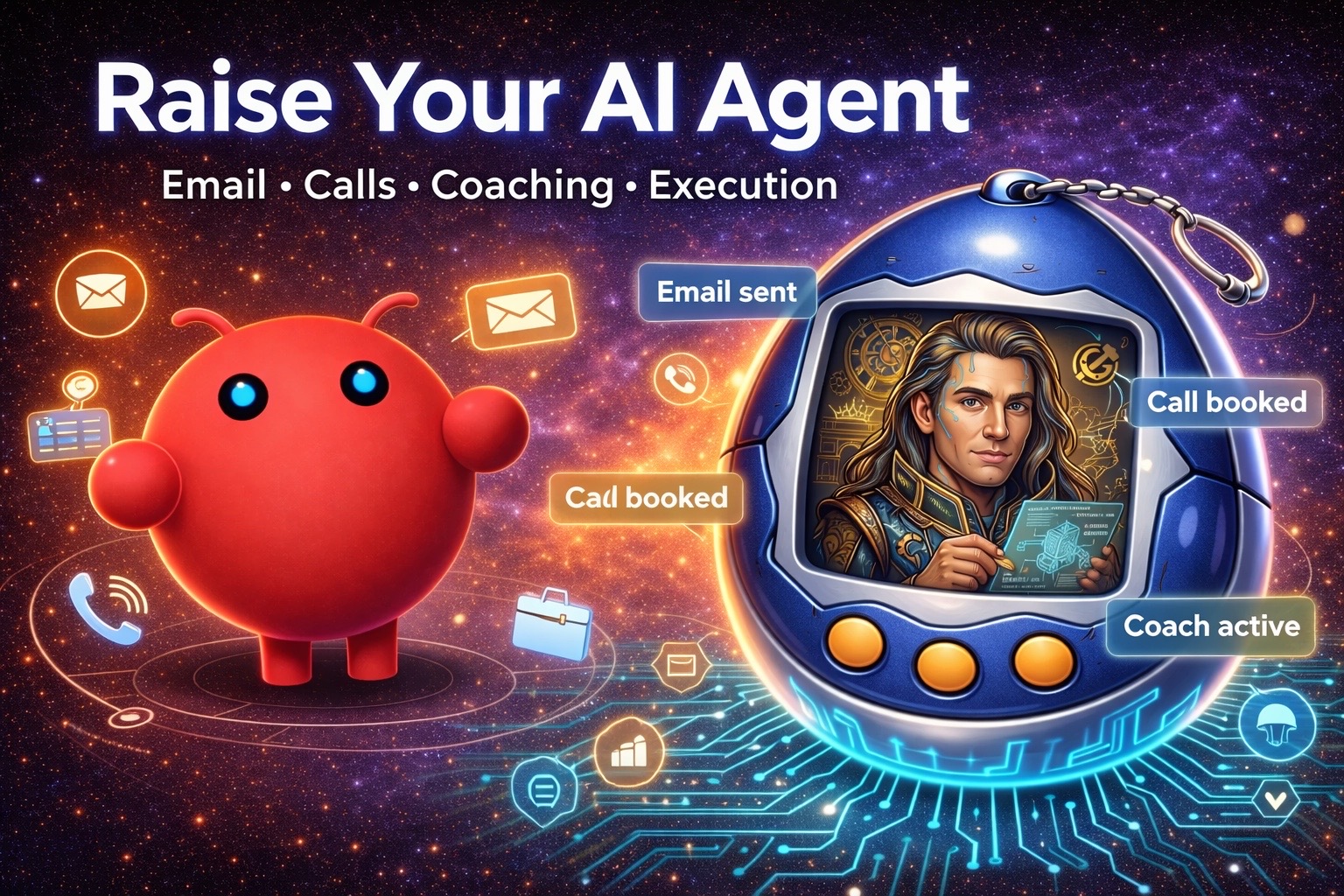
A Tamagotchi-style AI agent that evolves with you and is being shaped to help in the real world through memory, proactivity, security, and coordinated execution.
Why OpenClaw caught my attention
We grew up feeding digital pets. Now imagine raising an AI agent that does more than live on a screen. That idea is what drew me to OpenClaw.
I did not create OpenClaw; it is an open-source project. What I am doing is unpacking it, understanding how it works, and shaping it into something more personal: a Tamagotchi AI personal agent with stronger memory, clearer personality, better architecture, safer backups, and more proactive behavior.
Teaching the agent to improve itself
A big part of this experiment is teaching the agent to participate in its own improvement. I have been prompting OpenClaw to identify weak points, suggest upgrades, expand its capabilities, and become more proactive instead of waiting for every instruction.
I am also pushing it to harden its security surface, especially against prompt injection and other ways an AI can be manipulated off course. If a personal agent is going to carry context and act with more autonomy, its defenses need to evolve with its capabilities.
Mission Control instead of a single assistant
To support that evolution, I am designing a Mission Control system to organize the work. The vision is a team of specialized agents collaborating in a scrum-style workflow, sharing a backlog, surfacing updates, and helping move priorities forward instead of relying on a single assistant to do everything.
That model matters because it shifts the system away from isolated chat interactions and toward coordinated execution. The point is not to make the agent feel magical; the point is to make it operational.
From disposable assistant to personal operator
That is the real shift for me: I do not want an AI that forgets everything and starts from zero. I want one that remembers context, adapts to how I work, protects what matters, and becomes more useful over time.
I even gave it a public-facing identity online, because once an AI has memory, personality, and a visible presence, it starts to feel less like software and more like something you actively shape.
What open-source AI makes possible
To me, that is the promise of open-source AI. You do not need to build everything from scratch to create something original; you can start with a shared foundation and turn it into a system that reflects your goals, workflows, and standards.
I think that is where AI is heading next: not just toward smarter assistants, but toward AI personal agents we raise, refine, and eventually trust to help us operate in the real world.