OpenClaw: Unleashing AI Agents for Everyone.
A crowd beyond the code
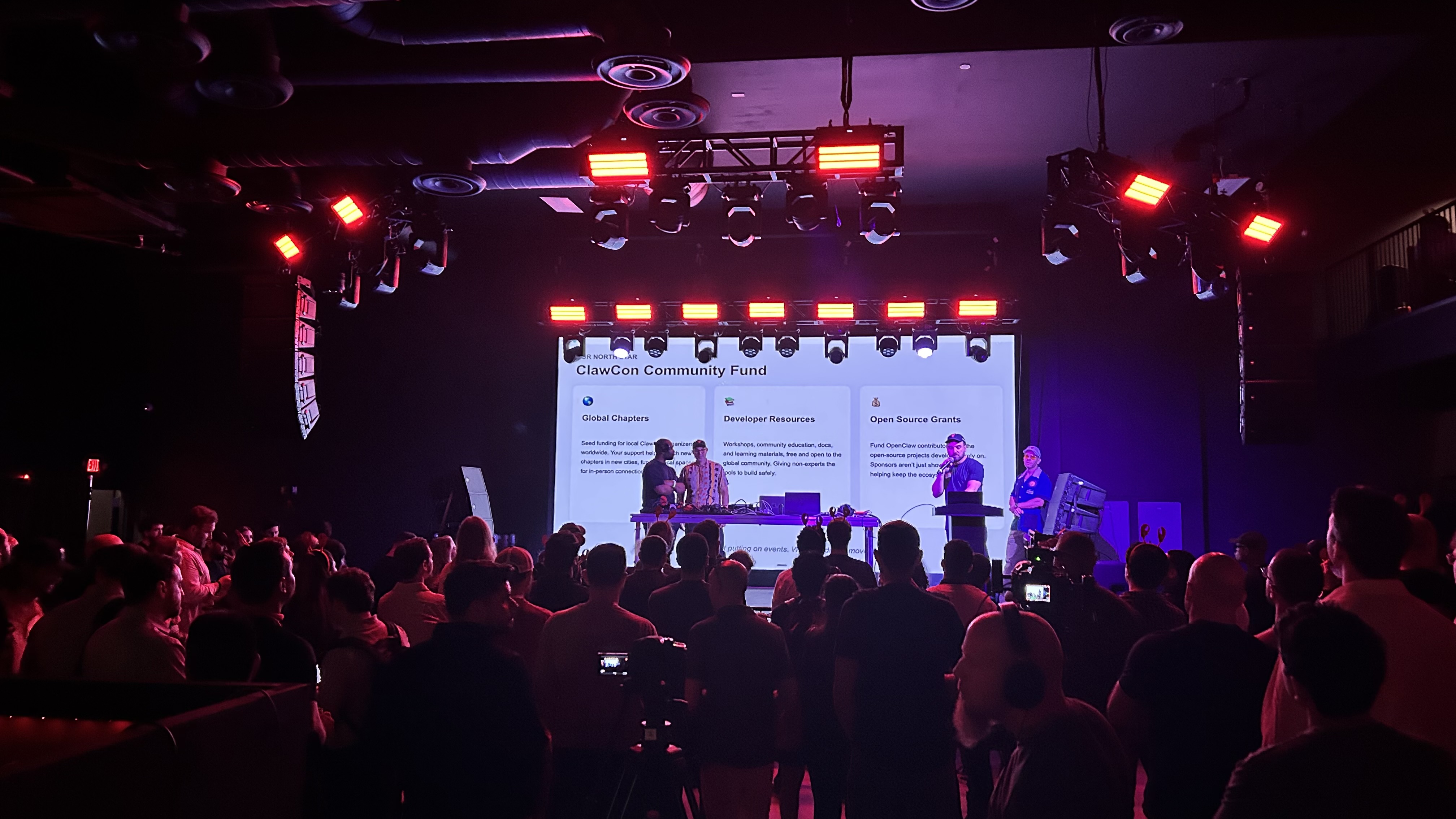
The line wrapped around the block in Miami under a warm, sun-drenched sky, and nobody was leaving. I expected a decent turnout for ClawCon, but not this. Dozens of people snaking past storefronts, checking their phones, swapping stories with strangers, all waiting to get into a conference about open-source AI agents.
The most striking thing was not the technology. It was the people. This was not a room full of engineers in hoodies. I saw students next to retirees, creative professionals alongside small business owners, newcomers who had never touched a command line chatting with people who had been shipping code for decades.
The common thread was not technical skill. It was curiosity, and a shared sense that AI agents, the idea that AI does not just answer questions but acts on your behalf, coordinating tasks, making decisions, and getting things done, is no longer reserved for big tech companies. It is becoming a tool anyone can pick up.
From social nodes to AI melodies
Two presentations stuck with me long after the talks ended. The first was Nod, a social network rethinking how we actually connect with each other. Instead of the usual scroll-and-like loop, Nod deploys AI agents that actively facilitate introductions between people.
Think of it less as a feed and more as a coordinator, something that looks at your interests, figures out who you should meet, and helps make it happen in the real world. It is a small but powerful shift: AI not replacing human interaction, but creating more of it.
The second demo was unforgettable. A speaker walked onstage and showed how he had used LLMs and AI agents to compose original music and then played it live for the room. It was genuinely moving. It reframed what I think this technology is for. AI agents are not just about automating spreadsheets. It can expand what we are capable of creatively.
The two-week transformation
The real magic happened after the talks, during the mingling. I spoke with someone who had come alone, no technical background, just curious about how OpenClaw could fit into his daily routine. He was not trying to build a startup or deploy infrastructure. He wanted to know whether this could actually help with day-to-day life. That question felt like the heartbeat of the whole event.
The conversation that really stayed with me was with two people working in media creation. Two weeks earlier, they knew nothing about Linux and nothing about AI tooling. But they had caught wind of the OpenClaw movement and decided to jump in.
In fourteen days, they taught themselves the basics, set up a Linux environment from scratch, and successfully deployed OpenClaw along with the Hermes agent. That is not just a story about how easy the software is. It is a story about what happens when people feel like a technology actually belongs to them.
The takeaway
Walking out of ClawCon, the feeling was hard to shake. This is not the AI revolution that lives only in research papers or keynote slides. It is messier, more human, and much more exciting than that.
Whether someone showed up to build a business, compose music, or simply figure out what all the fuss was about, the answer seemed the same: this stuff is real, it is accessible, and it is moving fast.
The energy in that room was not about software alone. It was about AI agents empowering real people, from every background, to build, create, and do things they never thought possible.